



You bit down on something hard—and now you’re pretty sure your tooth is cracked. It hurts when you chew, it’s sensitive to cold, and you’re Googling like crazy hoping there’s a way to fix it naturally.
Unfortunately, there is no natural way to repair a cracked tooth. Teeth are not like skin or bone—they can’t regenerate or heal themselves. But that doesn’t mean there’s nothing you can do. There are tips to help ease inflammation, reduce pain, and protect the area while you wait to be seen.
Why teeth can’t heal like skin or bone
When your skin gets a cut or your bone gets a fracture, your body goes into repair mode—sending blood, nutrients, and living cells to rebuild the tissue. That’s because those parts of the body are alive and constantly regenerating, versus the layers of a tooth. But teeth don’t work that way. The outer layer, enamel, is incredibly strong but completely non-living with no blood flow, no nerve endings, and no ability to regenerate once it’s damaged.
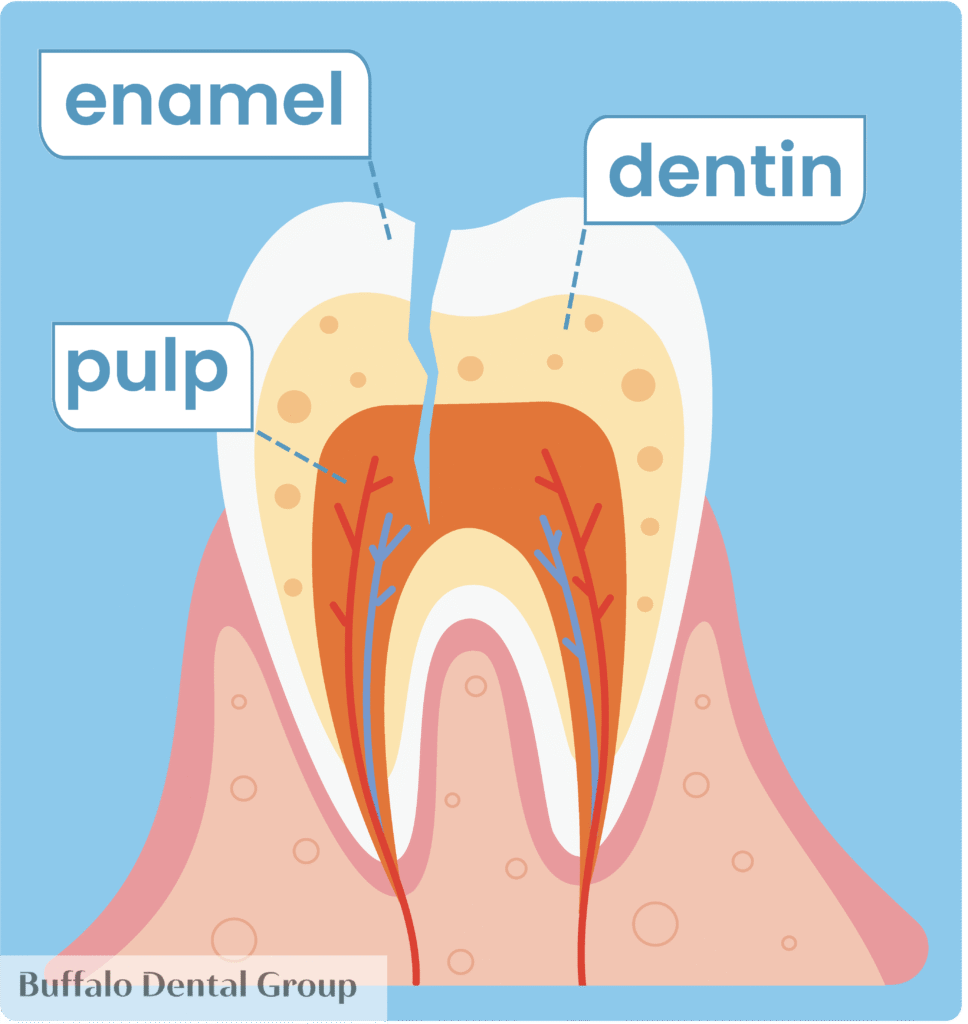
Beneath that is dentin, which is more sensitive and somewhat responsive, but still can’t repair itself like living tissue can.
At the center is the pulp, where nerves and blood vessels live. It can react to irritation by producing a small amount of protective dentin (called tertiary dentin), but that’s more of a defense mechanism rather than true healing.
So even though your tooth has layers, none of them can naturally close a crack. And if the damage reaches the pulp, the risk of infection goes up.
How natural remedies help (and what they can’t do)
While these natural remedies can’t heal a cracked tooth, let’s take advantage of what they can do: ease pain, reduce inflammation, and help limit bacterial buildup around the vulnerable area while you wait to see the dentist.
Natural remedies to manage a cracked tooth (until you see a dentist)
Cold Compress or Ice Pack
Hold a cold pack to the outside of your cheek near the sore area for 15 minutes. This helps reduce inflammation and numb the pain. (Never apply ice directly to the tooth or gum.)
Saltwater Rinse
A classic—and for good reason. Saltwater is naturally antibacterial and can help reduce inflammation. Mix 1 tsp salt with warm water and swish gently for 30 seconds. Repeat several times a day.
Peppermint Tea Bags
Let a warm (not hot!) peppermint tea bag cool slightly and press it against the sore area. Peppermint contains menthol, a compound with mild numbing and anti-inflammatory properties.
Ginger Root
Ginger contains natural anti-inflammatory compounds like gingerol. Chewing a thin slice of fresh ginger can help release those compounds at the source. If chewing is uncomfortable, you can make a ginger tea by steeping fresh ginger in hot water, let it cool slightly, and sip the tea slowly throughout the day—or use it as a gentle rinse.
Garlic Paste
Garlic contains allicin, a natural compound with strong antibacterial properties that may help reduce germs around the cracked area. To use, crush one fresh garlic clove and mix it with a drop or two of water to form a paste. Apply the paste gently to the sore area, leave it on for a few minutes, then rinse thoroughly.
Clove Oil
Clove oil contains eugenol, a natural compound with pain-relieving and antibacterial properties. Because it’s very strong, you only need one drop. Mix that drop with about 1 teaspoon of a carrier oil like olive or coconut oil. Apply a small amount of the diluted mixture to the sore area using a cotton swab. Leave it on for 10–15 minutes, then rinse your mouth thoroughly. Avoid swallowing, and do not use in young children without guidance from a healthcare provider.
What about remineralization?
You may have heard about natural approaches to remineralizing your teeth—and they do have value.
A remineralization-supporting lifestyle—like eating leafy greens, getting enough calcium, and using mineral-rich toothpaste—can help strengthen enamel in the early stages of erosion. It’s a smart way to support long-term oral health.
But remineralization can’t fix a crack.
It only affects the outer surface and only works when enamel is weakened—not broken. Once a physical crack has formed, no diet or topical treatment can rebuild the enamel or seal the fracture.
How a Dentist can fix a cracked tooth
Natural remedies can help you get by for a day or two—but a cracked tooth won’t heal on its own. The right treatment depends on the depth and location of the crack. Here are the most common options your dentist may recommend:
Dental Bonding
For small surface cracks or chips, a tooth-colored resin can be applied (dental bonding) to fill and seal the crack. This is a quick, non-invasive solution to resolve any cosmetic cracks and chips.
Crowns
If the crack goes deeper, a custom dental crown can be placed over the tooth to protect it and restore function. This helps prevent further breakage.
Root Canal
If the crack reaches the pulp—the center of the tooth that holds nerves and blood supply—a root canal may be needed to remove damaged tissue and seal the inside of the tooth.
Tooth Extraction
In cases where the tooth is severely cracked or split below the gumline, extraction may be necessary. From there, your dentist can talk with you about replacement options like implants or bridges.
The bottom line: don’t wait to get it checked
A cracked tooth won’t fix itself—and the longer it goes untreated, the more likely it is to lead to bigger problems.
If you’re dealing with pain, sensitivity, or think something just isn’t right, the safest move is to let a dentist take a look. Even if the discomfort fades temporarily, the crack is still there—and it can spread.
If you’re looking for a dentist in Buffalo, Minnesota, we’re here to help.
At Buffalo Dental Group, we offer clear answers, compassionate care, and same-day emergency visits when possible. Whether you need a simple repair or something more involved, we’ll walk you through your options and help you protect your smile.
Call Buffalo Dental Group today to schedule an exam or speak with our team. We’ll take great care of you.